
Philip Topolovac
.

DE
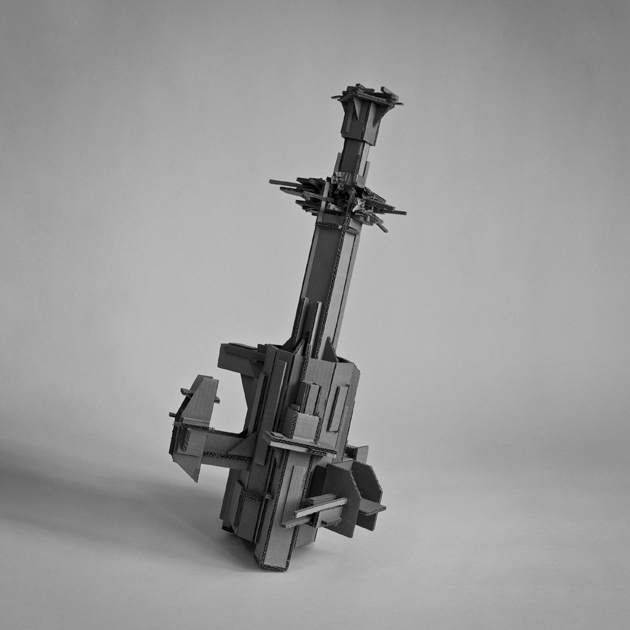
Philip Topolovac hinterfragt in seinen Arbeiten die Bedingungen der Wahrnehmung und den Sinn, den wir dem Gesehenen beimessen. Er thematisiert die Projektion und Interpretation von Realität, etwa in „Berliner Berge“, wo fotografierte Sandhaufen illusionistische Berglandschaften erzeugen. Seine „Mappings“ erfassen Orte als fragmentierte Abformungen, die einzigartige LandschafteinschÜsse festhalten, die es so nie wieder geben wird. Topolovac setzt sich auch mit der Ästhetik des Technisch-Rationalen auseinander, etwa in den „Aggregates“, die bedrohliche, maschinenartige Wucherungen darstellen. „Envisat“ verwandelt einen Satellitenverlust in ein Totem, das Selbstbeobachtung und Umweltzerstörung symbolisiert. In „Das Eismeer“ werden Satellitenbilder mit romantischen Gemälden konfrontiert, um Maßstäbe und Imaginationen zu hinterfragen. Das Projekt „I´ve never been to Berghain“ nutzt Korkmodelle, um Mythos und Geschichte des Clubs zu inszenieren. In „Orpheus“ verbindet eine schwimmende Skulptur Mythos mit Kriegsgeschichte und Verlorenheit. Topolovac sammelt zudem Kriegstrümmer aus Berlin, die er in Installationen und neuen Zusammenhängen präsentiert. Insgesamt setzt er auf Zweifel, Manipulation und historische Reflexion, um die Konstruktion unserer Identität und Realität sichtbar zu machen.
ENG
In his work, Philip Topolovac questions the conditions of perception and the meanings we assign to what we see. He explores the projection and interpretation of reality, as in Berliner Berge (Berlin Mountains), where photographs of piles of sand create the illusion of mountainous landscapes. His Mappings capture places through fragmented casts, preserving unique impressions of landscapes that will never exist in exactly the same form again. Topolovac also engages with the aesthetics of the technical and the rational. His Aggregates, for instance, appear as threatening, machine-like proliferations.
In Envisat, the loss of a satellite is transformed into a totem symbolizing both self-observation and environmental destruction. Das Eismeer (The Sea of Ice) confronts satellite imagery with Romantic painting, questioning notions of scale, perspective, and imagination. The project I’ve Never Been to Berghain uses cork models to explore and stage the mythology and history surrounding the Berlin club. In Orpheus, a floating sculpture brings together ancient myth, the history of war, and a sense of loss and disorientation.
Topolovac also collects wartime debris found in Berlin, presenting these fragments in installations and placing them within new contexts. Across his practice, he employs doubt, manipulation, and historical reflection to reveal the ways in which our perceptions of identity and reality are constructed.


More information:
philip-topolovac.com